




Many parents that want their kids to study English still believe in the stereotype that the best method of learning English is the one they use in schools. We all know that this does not help children learn and speak English well...


How do you teach kids to read so that they don’t lose interest and make it effective at the same time?


Learning to read in English isn’t easy. First of all, English has letters like ”Ww”, ”Hh”, and “Qq”, which sound different from how they are written. Second of all, there are a lot of reading rules and tons of exceptions. You should also be able to tell the open syllable from the closed syllable, and know what diphthongs, monophthongs, short and long sounds are. The famous English word “daughter” is quite a nightmare. This word alone is enough to make you want to stop learning English forever.
Methodists are still arguing about what age is the best to start teaching kids to read in a foreign language and which method is better – the phonetic or the “whole word” method. Each one has its advantages and disadvantages.
This method entails learning letters and sounds and coherent learning of reading rules, which means going from analysis to synthesis. The advantages are: this method teaches children to hear the sound and letter composition of the word and to tell various sound tones apart. But it is impossible for a preschooler or for a young child to memorize all the rules! That is why reading gradually becomes more and more boring.
This method teaches kids to remember reading each word without explaining the rules of sounds and letters. It is like a photographic effect. This method is good for teaching young children and is meant to help them recognise familiar words while reading. It is assumed that as the kids get older, their cognitive abilities develop further and make the analysis easier due to the accumulated experience. The disadvantages are problematic word spellings. Also, it is hard to recognise 100% of all the words when they appear in the text and not on cards.
Teachers on the Novakid online platform are using a mixed method – Reading Through Phonics, which unites the advantages of the aforementioned two methods.
Teaching kids to read is divided into 4 stages:

Each stage is divided into levels of various complexity that correspond to the child’s level of English. There are 4 levels in total. This way, the “method slowly gets the children immersed into the process of reading and lets them overcome obstacles one by one, which helps them maintain their interest in English and look forward to the next lesson”, says Amy Krovletskaya, the head of educational programs at Novakid.
How is your child learning to read in English? Tell us in the comments.
Sign up for a free English lesson on the Novakid website and give your child an opportunity to enjoy learning English!


Many parents that want their kids to study English still believe in the stereotype that the best method of learning English is the one they use in schools. We all know that this does not help children learn and speak English well...

Learning languages is more efficient when it is organised in a good, structured manner. Appropriate institutions have already developed some ways to evaluate one’s English proficiency and have provided defined proficiency levels to that end. There is an international standard called Common European Framework of Reference for Languages. This is the first thing you would probably like to know.

When people hear “English for kids” they associate it with something entertaining: playing, singing, dancing. Of course, if you only sing and dance, you won’t learn much. But if you prepare special English lessons and use singing and dancing as a learning tool, then it’s a whole different story.

Interactive games, role-play, songs, repetition, storytelling and much more! Find out which teaching methods work best for teaching English to children online.

How can you help your child to learn English without them losing interest and motivation?
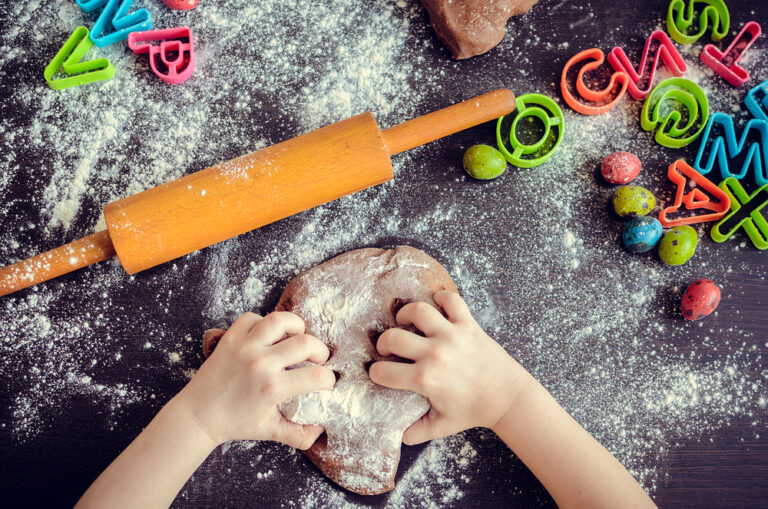
While cooking together with your child, some essential vocabulary for small chefs may come in handy. That’s why today we listed how to name some of the most commonly found food in English to practice and use with your child during your next cooking adventure.
We and our partners use cookies to improve your experience, personalize content and ads, and analyze traffic. By clicking 'Accept all', you agree to our use of cookies in accordance with the Cookie Policy.
You can personalize your choices by clicking on 'Cookie settings'.
We use four types of cookies on our website. You can learn more about cookies and how we use them here: Cookie Policy
Strictly necessary
Advertising
Analytics
Personalization